Themes and Ideas
Not Every Display Needs to Start From a Blank Page
Documented project themes, compositional approaches, and real case studies from
community crafters provide the concrete starting point that most shadow box makers spend
too long searching for on their own.
Browse Tutorials
- Themed project ideas
- Community case studies
- Archival technique focus
Documented Themes Worth Exploring on the Workbench
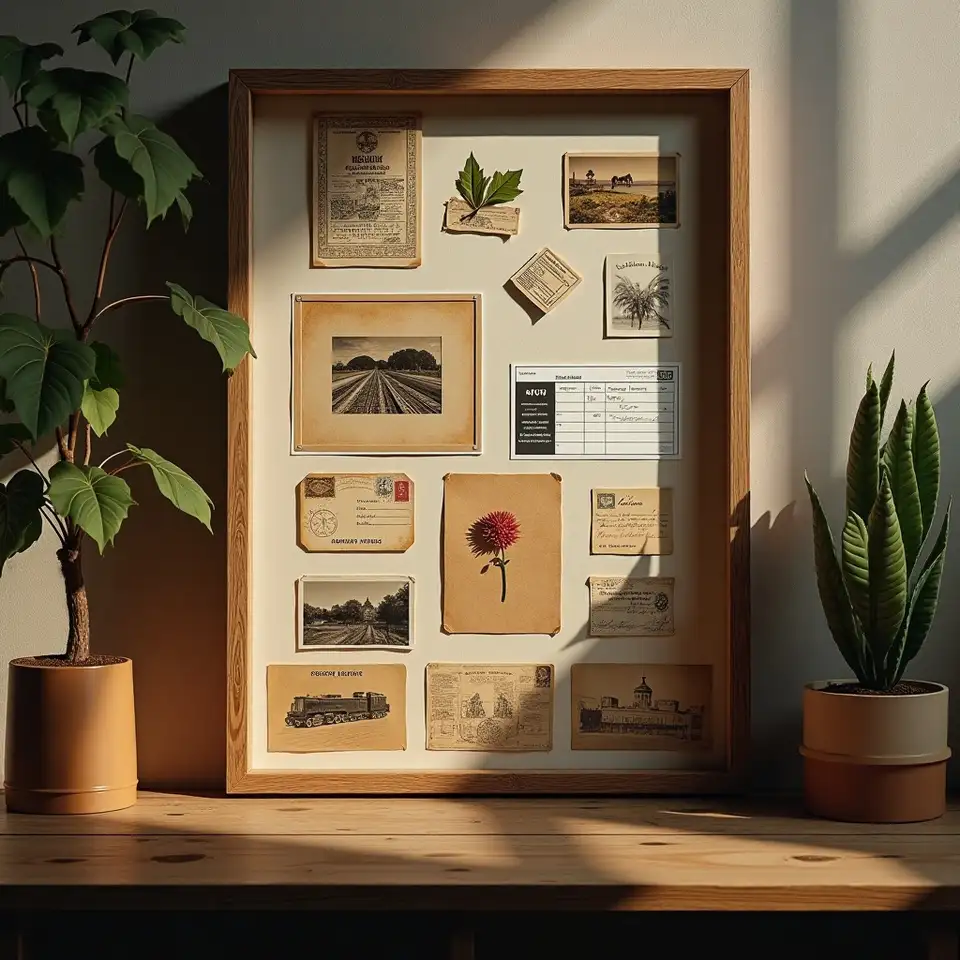
Vintage Travel Ephemera Display With Layered Depth and Sepia Palette
A Hobart crafter assembled this vintage travel display using objects gathered across three decades of collecting — railway tickets, hand-annotated maps, and a pressed fern from a 1970s hiking journal. The depth-staging method places the largest paper items against the backing board, with three-dimensional objects mounted on graduated foam risers at the front plane. The entire arrangement is housed behind UV-filtering acrylic in a reclaimed timber frame sourced from a local salvage yard. The case study is notable for its documentation of how the crafter tested the fern's acid content before mounting it against archival board.
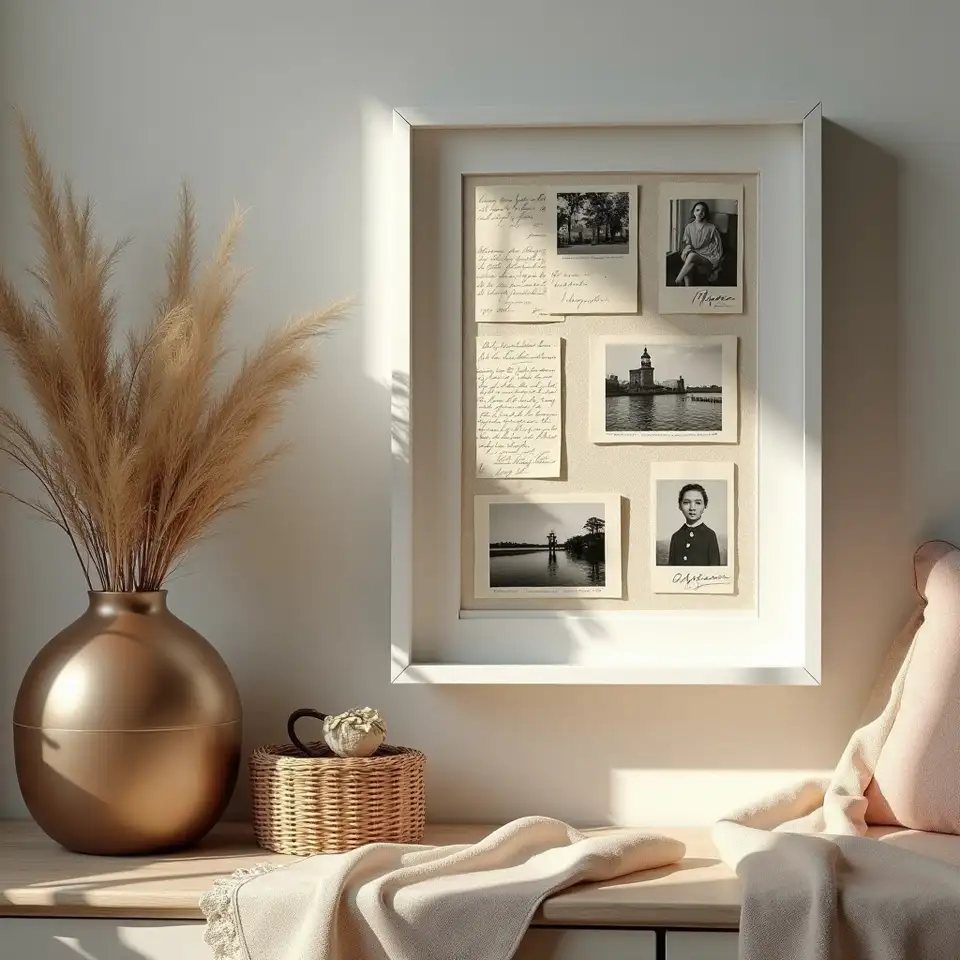
Family Heritage Display Combining Photographs, Letters, and Heirloom Fabric
Submitted by a Melbourne crafter who was tasked with preserving a grandmother's
letters alongside photographs spanning four generations, this family heritage display
solves a common compositional problem: how to give equal weight to objects of very
different sizes and material types without allowing the largest item to dominate the
arrangement. Conservation corner pockets hold the letters so they can be removed and
read without disturbing the display. The handwriting on the oldest letter is positioned
to be legible from normal viewing distance without requiring a magnifying aid. Lace
fabric is mounted on an acid-free tissue cradle that prevents any adhesive contact with
the fibre.
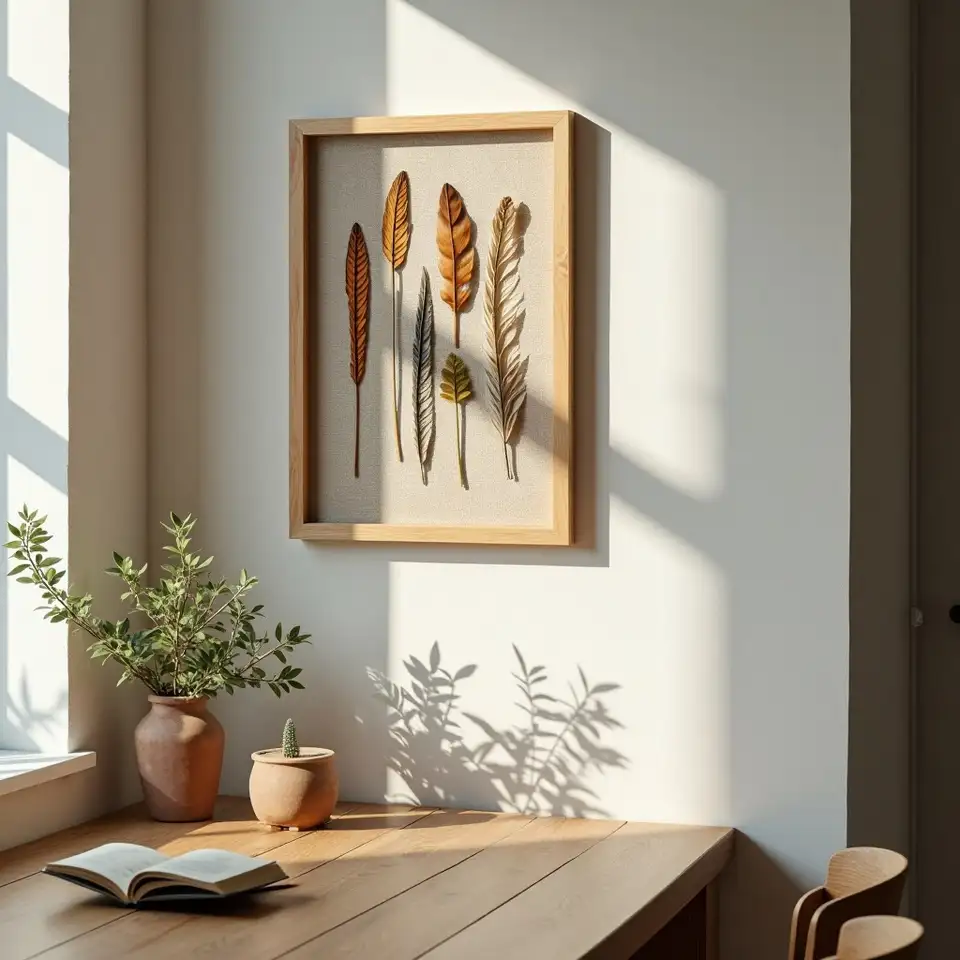
Seasonal Nature Collection Display Built Around Found and Pressed Botanicals
This minimalist nature display, documented by a Canberra crafter, demonstrates that
shadow box construction does not require rare or expensive objects to produce a display
of genuine visual authority. Seed pods, dried flower heads, pressed leaves, and a single
bird feather collected across one autumn season provide all the material. Each organic
element was tested for moisture content and sealed individually before mounting to
prevent the biological degradation that causes many botanical displays to discolour
within their first year. The natural linen backing was pre-washed and adhered with
conservation-grade PVA at the edges only, leaving the centre free to breathe. The case
study documents the full botanical preparation process in sufficient detail to serve as
a standalone reference.
Voices From the Workbench
Community crafters across Australia and internationally contribute their observations on
theme selection, compositional decision-making, and the practical discipline required to
produce shadow box displays that hold their integrity across years and decades of wall life.
These are their documented reflections, drawn from case study submissions reviewed by the
editorial team.
The most instructive perspective on shadow box inspiration does not come from design theory.
It comes from crafters who have built a display, lived with it for several years, and
returned to document what worked, what degraded, and what they would approach differently
the second time. The observations below are drawn from exactly those contributions —
community members whose projects are documented in the case study library and whose
technique decisions have been reviewed by practitioners with hands-on archival framing
experience.
The theme for the display was obvious from the first object placed on the workbench
— a single pressed wattle sprig collected on the day of a significant family event.
Every other object in the finished display was selected because it could support
that central object without competing with it for the viewer's attention. The
compositional principle documented in the nature display guide — that a clear focal
object simplifies every subsequent layout decision — proved to be entirely accurate
in practice. The display has been on the same wall for four years without any sign
of colour shift in the pressed botanical, which the crafter attributes to the
UV-filtering glazing and the pre-mounting acid test documented in the botanical
preparation case study.
Helen Morrison
Crafter, Adelaide
Military memorabilia presented a specific challenge that general craft inspiration pages consistently fail to address: the objects are often of genuine historical significance, and any mounting method that damages them is not a craft mistake but a preservation failure. The decision to use only reversible conservation pins throughout the display was made after reading the mounting technique documentation on this site, which explains the consequence of permanent adhesive contact with medal ribbons in language that is precise enough to be acted upon immediately. The finished display has been reviewed by two other collectors who subsequently changed their own mounting approach based on what this crafter documented in the submission.
Graham Sutton
Collector, Canberra
Vintage travel ephemera requires a theme decision before a compositional one: is the
display about a single journey or a lifetime of travel? The two approaches demand
different compositional logic. A single-journey display benefits from chronological
sequencing; a lifetime collection requires thematic grouping by object type rather
than date. The distinction is documented in the travel display case study library,
and working through it before placing a single object on the backing board saved
this crafter from a significant compositional revision mid-project. The
decision-making framework transferred directly to a subsequent family heritage
display built six months later.
Diane Kowalski
Hobbyist, Perth
The seasonal nature display was rebuilt once before the final version was documented in the case study submission. The first version used standard craft adhesive to mount dried seed pods directly to a standard cardboard backing board. Within fourteen months, the backing had warped from humidity absorbed through the unsealed frame rebate, and two of the seed pods had detached. The rebuilt version followed the archival sealing process documented in the finishing guides precisely, and has remained completely stable through two subsequent humid summers. The difference is not the objects or the arrangement — it is the backing board specification and the frame sealing step.
Marcus Johansson
Crafter, Darwin
Minimalist shadow box displays are frequently misunderstood as being simpler to
build than maximalist ones. The opposite is true. When fewer objects are present,
every gap in the arrangement becomes a compositional decision rather than an
accidental space. The depth-staging method documented in the layout guides is more,
not less, critical in a sparse display, because the viewer's eye has nothing to
distract it from an object that is mounted at the wrong depth plane. This
observation emerged directly from building the nature collection display and is
something that no general craft inspiration source encountered by this crafter had
ever stated plainly.
Claire Nakamura
Crafter, Brisbane
The most useful inspiration for a shadow box display is not a finished image of
someone else's work — it is a documented account of the decisions made during
that work, including the ones that were wrong. The case study submissions on this
site are valuable precisely because they include failure documentation. Reading
about a crafter who rebuilt a display after the backing board warped teaches more
about archival material selection than any number of polished finished-project
photographs. This approach to sharing community knowledge is what distinguishes this
resource from every other craft inspiration source consulted during the several
years this crafter has been building shadow box displays.
Anne-Marie Fitzgerald
Crafter, Sydney
Current Trends in Shadow Box Craft Observed Across the Community This Season
The case study library and community project submissions provide a practical signal of which
themes and material approaches crafters are currently pursuing — a more honest measure of
what is working than any trend forecast could offer.
Community Trend
Repurposed and Salvaged Frame Materials Gaining Ground Among Experienced Crafters
A growing number of community submissions feature shadow box displays housed in salvaged or repurposed frames sourced from markets, estate sales, and architectural salvage yards. Crafters documenting these projects consistently note that reclaimed timber frames provide a depth and character that new frames cannot replicate, and that the internal dimensions of older frames often accommodate more ambitious depth-staging arrangements than standard contemporary options allow. The editorial team has observed this pattern across submissions from Queensland, Victoria, and Western Australia over the past several months, and has commissioned a dedicated guide on assessing and preparing salvaged frames for archival use.
#salvaged frames
#sustainable craft
#archival prep
Seasonal Theme
Botanical and Nature-Themed Displays Dominate Autumn Project Submissions Across Australia
Nature-themed shadow box displays — incorporating pressed botanicals, seed pods, feathers, and organic textile fragments — represent the strongest single category of project submissions received in the autumn period. The editorial team attributes this to the seasonal availability of high-quality botanical material and to the increased visibility of botanical preparation documentation published earlier in the year. Several submissions in this category have documented the full preparation process from collection through acid testing to final mounting, providing case studies detailed enough to serve as standalone guides for crafters approaching botanical display for the first time.
#botanical display
#nature theme
#autumn crafting
Principles That Guide Every Theme
These four values underpin the editorial approach to every piece of inspiration content
published on this site.
Creativity Within Constraints
The most inventive shadow box displays emerge not from unlimited materials but from deliberate choices made within the constraints of a specific set of found objects, a fixed frame size, and the archival requirements that protect whatever is mounted inside. Creativity and technical discipline are not in opposition — the constraint is the condition that makes genuine ingenuity necessary.
Inclusivity of Theme and Object
Shadow box craft is not confined to any single category of memento or life experience. Military service, travel, family history, botanical collection, and seasonal observation are equally valid subjects, and the compositional and archival principles that produce sound results apply across all of them without modification. Every theme documented here is treated with the same level of technical rigour.
Sustainability Through Repurposing
Found objects, salvaged frames, and repurposed materials are not second-best alternatives to new craft supplies — they are frequently the more interesting and more durable option. Community submissions consistently demonstrate that displays built from repurposed materials carry a narrative weight that purpose-bought objects cannot easily replicate, and that reclaimed timber frames often provide superior depth for layered arrangements.
Mindfulness in the Making Process
The process of selecting, cleaning, testing, and arranging objects for a shadow box display is itself a form of deliberate attention that most crafters find satisfying independently of the finished result. Treating each decision — which object, which position, which mounting method — as a considered act rather than a convenience produces both a better display and a more rewarding experience at the workbench.
Share Your Project
Every finished display submitted to the community gallery with material notes and technique documentation becomes part of a practical archive that helps the next crafter make better decisions at the workbench. The most instructive submissions are not the most polished ones — they are the ones that document what failed before what succeeded. Projects built with archival materials, reversible mounting, and considered compositional logic are exactly what this library needs. Submit a completed display, join the discussion in the community forum, or begin working through the tutorial library to apply a specific technique to the next project already in progress.
Start Creating